Uneven ground is one of the most common challenges in outdoor renovation projects. An old concrete patio may have settled over time, a garden path may follow the natural contours of the landscape, or a rooftop terrace may include drainage slopes that make the surface anything but level.
Faced with these situations, many homeowners immediately assume that outdoor flooring installation will require extensive ground preparation or expensive reconstruction work.
Fortunately, that is not always the case.
The short answer is yes — outdoor WPC panels can be installed on uneven ground, but the success of the project depends less on the panels themselves and more on the supporting structure beneath them.
Materials such as ceramic tiles or poured concrete generally demand a flat and stable base. Even minor height differences can lead to cracking, poor drainage, or visible surface irregularities.
Outdoor decking systems face a different set of challenges:
▶ Water may accumulate in low areas.
▶ Uneven support can create movement underfoot.
▶ Stress concentrations may shorten the lifespan of the flooring.
▶ Seasonal expansion and contraction become more difficult to manage.
These issues become particularly common in renovation projects where removing the original surface is either impractical or too costly.
A slightly sloped garden or an aging patio should not automatically rule out installing a deck, but it does mean the installation method becomes far more important.
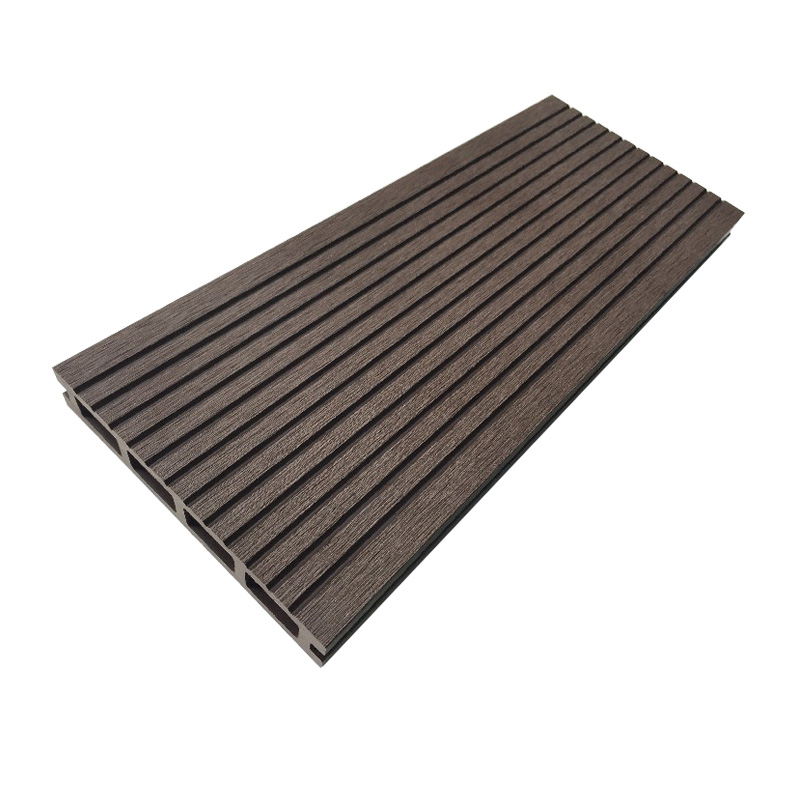
One reason WPC decking systems have become increasingly popular is that they rarely rely on the ground surface itself for structural support.
Instead, the decking boards are installed on a framework that creates a stable and level platform above the existing ground.
This approach offers several advantages:
▶ Minor slopes can often be accommodated without major preparation.
▶ Drainage beneath the deck remains unobstructed.
▶ Air circulation improves moisture management.
▶ Future maintenance or replacement becomes easier.
In many projects, the deck essentially "floats" above the imperfections of the original surface.
Not all uneven ground conditions are equal. Some situations are easily addressed during installation, while others may require additional preparation work.
| Ground Condition | Suitable for Outdoor WPC Panels? | Recommended Solution |
|---|---|---|
| Slight slope for drainage | Yes | Standard joist installation |
| Existing concrete patio with minor irregularities | Yes | Shims or leveling pads |
| Rooftop with drainage falls | Yes | Adjustable support system |
| Moderate settlement or uneven paving | Usually | Adjustable pedestals recommended |
| Soft soil or unstable ground | Limited | Foundation preparation required |
In practice, slight unevenness is rarely a problem for professional installers.
Large height variations, however, should be addressed before installation begins to ensure long-term stability.
Traditional deck construction often requires cutting, measuring, and fastening individual boards over a prepared subframe. While this approach works well for large projects, smaller renovation jobs often benefit from something more flexible.
This is where modular DIY WPC decking systems have gained attention.
Interlocking deck tiles and panel systems can be installed over many existing surfaces with minimal preparation, making them particularly attractive for:
▶ balconies,
▶ rooftop terraces,
▶ courtyards,
▶ temporary outdoor spaces,
▶ garden renovation projects.
Many homeowners are surprised by how quickly an unused outdoor corner can be transformed into a functional seating area or walkway.
The appeal is not only speed of installation but also reversibility. If the layout changes in the future, sections can often be removed or repositioned without major demolition work.
This concern is understandable.
In reality, the walking experience depends far more on the quality of the support structure than on the original surface itself.
A properly designed joist system distributes loads evenly across the deck, creating a firm and comfortable feel underfoot. Once installation is complete, most users would never notice that the original ground beneath the deck contained slopes or irregularities.
Poor installation practices, on the other hand, can cause movement even on perfectly flat concrete.

For small outdoor areas, simplicity often becomes just as important as performance.
Products such as DIY outdoor WPC decking panels are particularly useful for homeowners who want to upgrade an outdoor space without turning the project into a major construction job. Interlocking systems reduce installation complexity while still offering the durability and weather resistance expected from modern WPC materials.
Applications such as apartment balconies, poolside relaxation areas, garden seating zones, and rooftop corners often benefit most from this approach.
The result is an outdoor surface that combines the natural appearance of wood with the low-maintenance characteristics that have made WPC decking increasingly popular worldwide.
When evaluating an outdoor decking project, uneven ground should be viewed as a design consideration rather than a limitation.
Modern installation systems, adjustable supports, and modular decking technologies have made it possible to install outdoor WPC panels in locations that would have been difficult or expensive to develop using traditional materials.
In many cases, the question is no longer whether WPC panels can be installed on uneven ground.
The more useful question is simply:
What installation system is best suited to the ground you already have?