Outdoor flooring needs to do more than create an attractive surface. It must withstand changing weather, support regular foot traffic, manage moisture, and remain stable over time. Whether used for garden walkways, residential patios, hotel terraces, or public outdoor spaces, the quality of the entire flooring system determines its long-term performance.
This is why choosing outdoor WPC flooring involves more than selecting attractive deck boards. Material composition, board structure, supporting frameworks, drainage, and installation details all work together to create a reliable outdoor surface.
The performance of WPC flooring starts with its raw materials. Wood Plastic Composite generally combines wood fibers or wood flour with thermoplastic polymers and functional additives.
Wood fibers contribute to the natural appearance and texture, while plastic components help improve moisture resistance and material stability. Additives can also provide additional protection against UV exposure, oxidation, and other environmental factors.
For example, Yuante's outdoor WPC floor panels use a material composition of 55% natural wood fiber, 35% recycled HDPE, and 10% chemical additives. This combination is designed to balance the appearance of natural wood with the practical requirements of outdoor applications.
Material consistency is equally important. Uneven mixing, poor-quality raw materials, or inconsistent manufacturing can affect the appearance and physical properties of finished boards.

Not all WPC decking boards have the same internal structure. Solid and hollow profiles are two common options, each with different characteristics.
Solid WPC boards have a denser structure and may be suitable for applications requiring particular structural characteristics. Hollow boards contain internal cavities that reduce material usage and overall board weight. However, their performance depends on profile design, wall thickness, support spacing, and installation conditions.
For many outdoor flooring applications, hollow WPC boards offer a practical balance between weight and material efficiency.
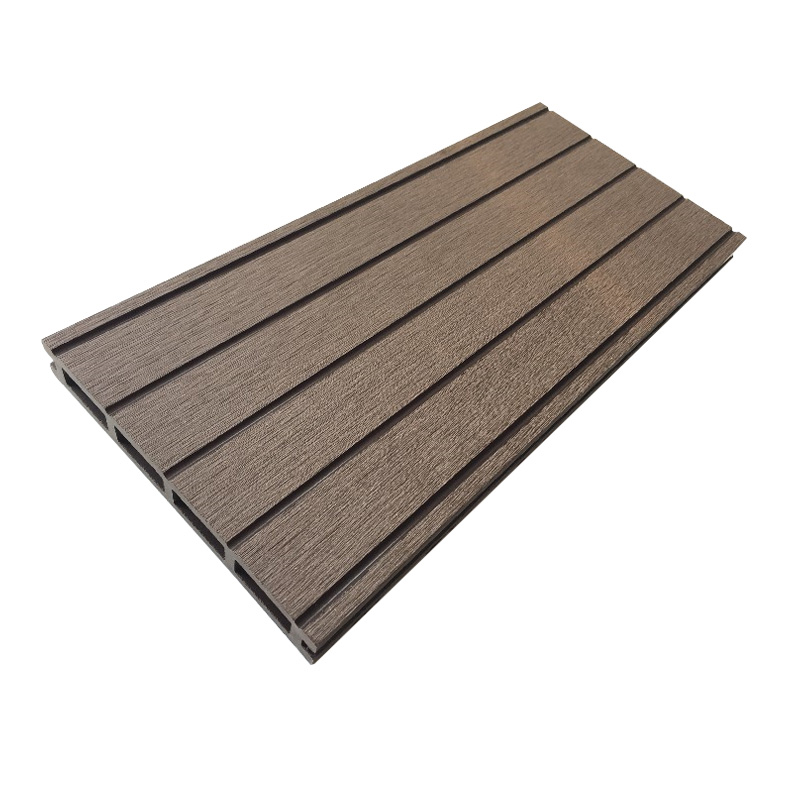
Board dimensions also influence the finished surface. For example, Yuante's YT-A140H23 outdoor WPC floor panel measures 140 × 23 mm and features a hollow profile. Its dimensions and structural design make it an option worth considering for patios, garden walkways, and other outdoor flooring projects.
The surface is the most visible part of an outdoor WPC flooring system. Its texture influences the overall design, cleaning experience, and interaction with the surrounding environment.
Some boards feature wood-grain finishes that create a natural timber appearance, while others use grooved or relatively smooth surfaces.
Reversible decking boards provide additional design flexibility. Yuante's YT-A140H23, for instance, features a narrow-groove texture on one side and a flat surface on the other. This allows different visual effects to be achieved using the same board profile.
When choosing a surface, consider the intended application rather than appearance alone. Grooved textures may help create a distinctive visual pattern, while flatter surfaces can offer a simpler appearance and may be easier to wipe clean. Neither design automatically guarantees slip resistance, so the actual surface performance should be evaluated for the intended environment.
Even high-quality WPC boards can experience problems if the supporting framework is poorly designed.
Outdoor WPC flooring generally requires a suitable substructure, often made from compatible WPC or metal joists. These components support the deck boards and help distribute loads across the installation area.
Several factors need attention during installation:
Joist spacing: Follow the manufacturer's recommended support distance according to the board profile and expected loading.
Fixing systems: Use suitable clips, screws, and accessories to secure the boards without restricting necessary movement.
Expansion gaps: Allow sufficient space for thermal expansion and contraction.
Ground preparation: Ensure the foundation is stable and properly prepared before installing the supporting framework.
These details are particularly important for large terraces and outdoor platforms, where installation inconsistencies can become more noticeable over time.
Outdoor flooring is constantly exposed to rain, humidity, and occasional standing water. Without proper drainage, moisture can accumulate beneath the deck and affect the supporting structure or surrounding ground.
A well-designed outdoor WPC flooring system should include an appropriate drainage arrangement. The foundation should have a suitable slope to direct water away, while sufficient clearance beneath the boards allows air circulation.
This is especially important in gardens, poolside areas, and other locations where the flooring may frequently come into contact with moisture.
Although WPC generally offers better moisture resistance than untreated natural wood, it should not be treated as a completely waterproof installation system. Proper drainage and ventilation remain essential.
One reason outdoor WPC flooring is increasingly considered for landscaping and outdoor construction is its relatively low maintenance requirements.
Unlike many natural wood surfaces, WPC decking generally does not require routine painting, staining, or sealing. Regular cleaning with water and a suitable mild detergent is usually sufficient for everyday dirt and debris.
However, maintenance requirements vary depending on the product's surface technology and installation environment. Periodic inspection of fixing components, drainage channels, and supporting structures is still worthwhile.
For outdoor spaces that experience frequent use, reducing routine maintenance can make a meaningful difference to long-term convenience.
A good outdoor WPC flooring system is the result of several elements working together. Quality materials provide the foundation, suitable board profiles meet different application requirements, and a properly designed supporting structure helps maintain stability.
Drainage, ventilation, expansion gaps, and regular cleaning are equally important. Ignoring these details can limit the performance of even well-manufactured decking boards.
When selecting outdoor WPC flooring, it is worth looking beyond the appearance of individual boards and considering how the complete system will perform in its intended environment. With the right combination of materials, structural design, and installation practices, WPC flooring can provide an attractive and practical surface for patios, gardens, terraces, and other outdoor spaces.