WPC (wood-plastic composite) flooring is widely recognized for its low maintenance requirements and long service life , making it a preferred choice for outdoor decks, terraces, and commercial walkways. However, “low maintenance” does not mean “no maintenance.” Environmental exposure—such as dust, rain, organic debris, and UV radiation—can gradually affect the surface condition of any outdoor flooring system. Proper cleaning and maintenance practices are essential to preserve both appearance and structural performance over time.
WPC flooring is manufactured from a combination of wood fibers and thermoplastic polymers , creating a material that is more resistant to moisture, rot, and deformation than natural wood. However, the surface characteristics vary depending on the product type:
Traditional WPC flooring : slightly porous surface, more prone to staining
Co-extrusion WPC flooring : protected by a polymer cap layer, offering enhanced resistance to moisture, stains, and UV exposure
This distinction is important because it directly influences how easily the flooring can be cleaned and how frequently maintenance is required.
Regular cleaning prevents the accumulation of dirt and organic matter that may lead to discoloration or surface degradation.
For general upkeep:
Sweep away dust, leaves, and debris using a soft broom
Use a soft brush or mop for light scrubbing if necessary
This basic routine helps maintain a clean surface and prevents buildup that could become more difficult to remove over time.
Depending on environmental conditions, a more thorough cleaning is recommended every few weeks or months:
Use mild, non-abrasive detergents
Scrub gently with a soft-bristle brush
Rinse thoroughly to avoid residue
Avoid harsh chemicals, strong acids, or wire brushes , as these may damage the surface layer and reduce the lifespan of the flooring.
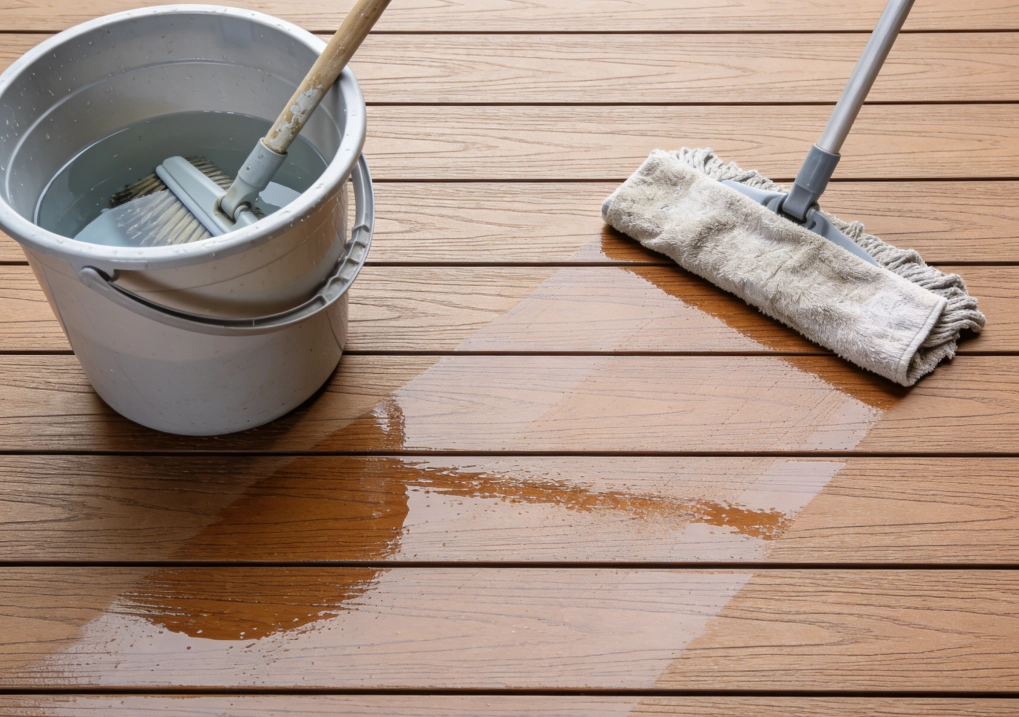
Outdoor environments introduce a variety of contaminants. Addressing them promptly is key to maintaining performance.
Oil and Grease Stains
Common in outdoor dining or barbecue areas:
Clean immediately using warm water and mild detergent
Mold and Mildew
Occur in humid or shaded environments:
Typically caused by trapped moisture and organic debris
Use specialized cleaning solutions designed for composite materials
Improve ventilation and drainage to prevent recurrence
Surface Scratches
Minor scratches may become less visible after cleaning
Deeper damage may require board replacement, as sanding is generally not recommended for composite surfaces
Standing Water and Drainage Issues
Persistent water accumulation can lead to surface contamination
Ensure proper slope and drainage design to minimize long-term issues
Long-Term Maintenance and Preventive Measures
Preventive care is more effective than corrective maintenance. Several practices can significantly extend the lifespan of WPC flooring:
Ensure proper ventilation beneath the deck to reduce moisture buildup
Use protective pads under furniture to prevent scratches and pressure marks
Avoid prolonged water exposure, especially in poorly drained areas
Maintain proper installation gaps to accommodate thermal expansion
These measures not only protect the surface but also support the structural stability of the entire decking system.
Maintenance Differences Between WPC Types
Different WPC structures result in varying maintenance requirements:
| Type of WPC Flooring | Maintenance Level | Key Characteristics |
| Traditional WPC | Moderate | More prone to staining and fading |
| Co-extrusion WPC | Low | Enhanced stain, UV, and moisture resistance |
Co-extrusion WPC flooring offers a clear advantage in environments where cleanliness, appearance retention, and durability are critical.
From a material engineering perspective, the ease of maintenance is strongly influenced by surface technology. Co-extrusion products, such as the Yuante YT-C series WPC flooring, are designed with a high-performance protective outer layer that significantly reduces dirt adhesion and stain penetration.
This type of flooring is particularly suitable for applications where frequent cleaning is impractical, such as commercial terraces, public walkways, or poolside areas. The enhanced surface protection allows routine cleaning to remain simple while maintaining a consistent appearance over time. As a result, maintenance effort and long-term costs can be effectively minimized.
WPC flooring offers a durable and low-maintenance alternative to traditional outdoor materials, but proper care remains essential for optimal performance. Regular cleaning, timely stain removal, and preventive measures all contribute to extending the lifespan and preserving the appearance of the flooring.
Material selection also plays a critical role. Advanced solutions such as co-extrusion WPC flooring reduce maintenance demands and improve long-term reliability. By combining appropriate maintenance practices with the right product choice, outdoor flooring systems can deliver both functional durability and lasting visual appeal.